Peer Academic Leader: Duties, Skills, Training, and Benefits
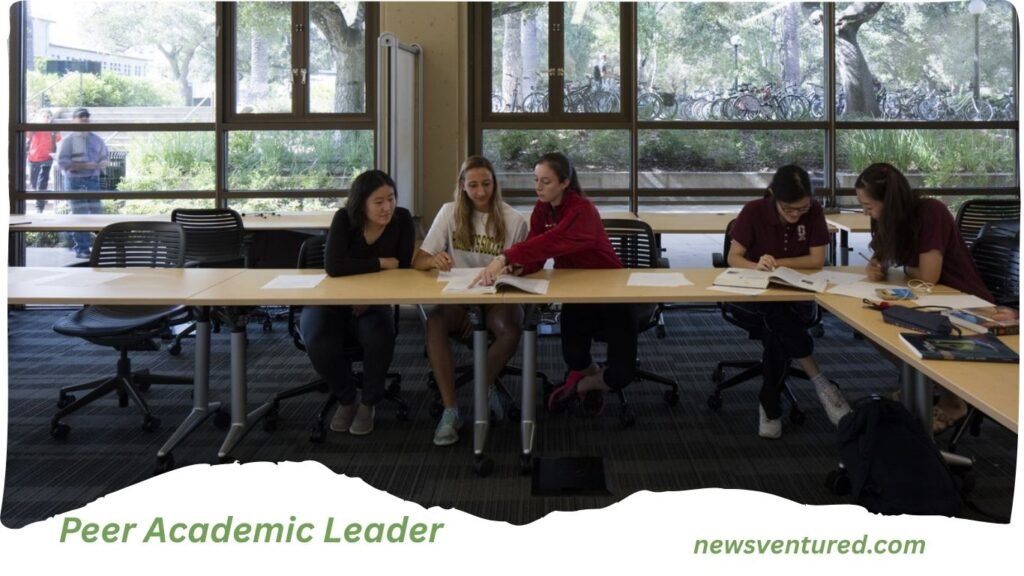
If you have seen the term “peer academic leader” on a college website, you may wonder what it means and what these students actually do. A peer academic leader, often called a PAL, is usually an undergraduate student who helps other students succeed academically and adjust to college life.
PALs are different from professors and professional academic advisors. They are students who have already experienced many of the same challenges as their peers. Depending on the university, a PAL may lead study sessions, organize workshops, answer general academic questions, explain campus resources, support first-year students, or help students develop better study habits.
The exact duties can vary from one college to another. For example, Southern Methodist University describes PALs as undergraduate students who help peers understand academic requirements, use academic resources, and navigate academic challenges. The program also offers individual appointments and educational programming.
At the University of Missouri-Kansas City, Peer Academic Leaders connect incoming students with campus resources, meet students individually, and facilitate workshops.
This guide explains the meaning of peer academic leader, what PALs do, how peer academic leadership programs work, the skills needed for the role, benefits for students, and what students should know before using or applying to a PAL program.
What Is a Peer Academic Leader?
A peer academic leader is a trained undergraduate student who provides academic guidance, mentoring, and campus support to fellow students.
The word “peer” is important. A PAL is usually a student rather than a faculty member or professional advisor. Because the PAL has direct experience with college courses and campus life, students may find it easier to ask questions and discuss challenges with them.
A PAL may help students:
- Understand college academic systems
- Find useful campus resources
- Develop better study habits
- Prepare for challenging courses
- Join study groups
- Attend academic workshops
- Understand general university processes
- Adjust to the first year of college
- Find tutoring or advising services
- Become more comfortable asking for help
However, a PAL is not normally a replacement for a professor, academic advisor, counselor, or other professional university employee.
The role is designed to connect students with the right support while providing practical peer-to-peer guidance.

How Does a Peer Academic Leader Program Work?
There is no single national model for PAL programs. Universities design their programs around their own students, courses, and academic support systems.
Some PAL programs focus mainly on first-year students. Others support specific academic subjects, residence communities, general education courses, or particular student populations.
For example, Barnard College’s PAL program focuses on helping first-year and first-generation students transition into college. PALs meet with students regularly and receive training for the role.
Other programs are more course-focused.
At the University of Hawaiʻi–West Oʻahu, PALs support students in mathematics and science courses. They may provide tutoring, facilitate discussions, and work with faculty members.
This means the phrase “peer academic leader” can describe several related types of student-support roles.
What Does a Peer Academic Leader Do?
The daily work of a PAL depends on the university program, but several responsibilities are common.
Academic Mentoring
A PAL may help students think through academic problems and develop strategies for improvement.
For example, a student might say that they are struggling to manage reading assignments, lectures, exams, and extracurricular activities. Rather than simply giving an answer, the PAL can help the student create a realistic study plan.
Good peer mentoring focuses on helping students become more independent learners.
Study Groups
Some PALs organize small study groups.
Also Read:Brumeblog Com: A Complete Guide to the Multi-Niche Publishing Platform
A study group can provide a structured environment where students review course concepts, practice problems, discuss difficult topics, and learn from one another.
The PAL may guide the discussion instead of simply lecturing.
Workshops
Workshops are another common PAL activity.
A university may ask PALs to organize sessions about topics such as:
- Study skills
- Time management
- Academic planning
- Campus resources
- Exam preparation
- Note-taking
- Research skills
- College transition
- Academic technology
UMKC, for example, states that its PALs facilitate workshops as part of their student support role.
Campus Resource Navigation
College students often do not know which office can help with a particular problem.
A PAL can help students identify resources such as:
- Academic advising
- Tutoring centers
- Writing centers
- Libraries
- Accessibility services
- Career services
- Financial aid offices
- Student success programs
- Faculty office hours
The PAL does not need to know every answer. A strong PAL knows when to connect a student with the appropriate professional or campus office.
First-Year Student Support
Starting college can be confusing.
New students may need help understanding registration, course schedules, study expectations, campus systems, and academic communication.
Some PAL programs specifically place experienced students with first-year students to make this transition easier.
The University of North Carolina at Greensboro describes PALs as mentors who help new students navigate first-year challenges and connect them with campus resources.
Peer Academic Leader vs. Academic Advisor
A peer academic leader and academic advisor can both help students, but they have different roles.
An academic advisor is normally a university professional or faculty member with formal responsibility for academic advising. Advisors may help with degree requirements, course planning, graduation progress, policies, and other official academic matters.
A PAL generally provides peer support and helps students navigate their college experience.
A simple way to understand the difference is:
| Peer Academic Leader | Academic Advisor |
| Usually an undergraduate student | Usually a professional or faculty member |
| Provides peer mentoring | Provides formal academic advising |
| Shares student experience | Provides institutional expertise |
| May lead study groups | May approve or guide academic plans |
| Helps students find resources | Explains official requirements and policies |
| Often focuses on transition and academic habits | Often focuses on degree progress and academic planning |
The two roles can work together.
A PAL might recognize that a student has a complicated degree-planning question and direct that student to an academic advisor.
Peer Academic Leader vs. Peer Tutor
PALs and peer tutors can also have overlapping duties.
A peer tutor generally focuses on a specific subject or course. The tutor may explain course concepts, review practice questions, and help students improve their understanding.
A PAL can have a broader role.
For example, a PAL might help a first-year student understand how to find tutoring, improve time management, learn about campus resources, and form effective study habits.
Some PAL programs do include tutoring. The University of Hawaiʻi–West Oʻahu and Miami Dade College are examples of programs where PALs provide course-related academic support.
The distinction therefore depends on the university.
What Skills Does a Peer Academic Leader Need?
Being a strong student is useful, but academic performance alone does not make someone an effective PAL.
Successful peer academic leaders often need a combination of academic knowledge and interpersonal skills.
Communication Skills
PALs need to explain information clearly.
They may work with students who have different academic backgrounds, learning styles, and levels of confidence.
Simple and respectful communication is important.
Active Listening
A PAL should listen before giving advice.
Sometimes a student who says “I am bad at this class” may actually be struggling with time management, unclear instructions, test anxiety, or difficulty finding resources.
Listening helps the PAL identify the real issue.
Organization
PALs may manage meetings, workshops, study groups, schedules, and university resources.
Strong organization helps them remain reliable.
Leadership
A PAL is a student leader, but leadership does not mean controlling other students.
Good peer leadership means encouraging students to participate, helping them find answers, and showing them how to become more independent.
Empathy
Students may feel embarrassed about asking for help.
A PAL should create a welcoming environment where questions are treated respectfully.
Problem-Solving
Many student problems do not have one simple answer.
A PAL needs to identify the problem, consider available options, and know when to refer the student to someone with specialized expertise.
Professional Boundaries
This is one of the most important skills.
A PAL should understand the limits of the role.
For example, a PAL should not pretend to be a licensed counselor, make official academic decisions, provide confidential professional services outside their training, or complete assignments for another student.
What Are the Benefits of Having a Peer Academic Leader?
Peer academic leadership can benefit both students receiving support and students serving as PALs.
Benefits for Students
A PAL can make college resources easier to understand.
Instead of searching through many university webpages, a student may be able to ask a PAL where to start.
Peer support can also make academic help feel less intimidating.
Students may be more comfortable saying, “I do not understand this,” to another student who has recently faced similar challenges.
Benefits for First-Year Students
The first year of college involves many changes.
Students must often manage their own schedules, deadlines, studying, communication, and daily responsibilities.
A PAL can provide practical guidance during this transition.
Programs such as those at Barnard, UMKC, and UNC Greensboro specifically use peer leaders to support students during the transition into college.
Benefits for PALs
The PAL role can also help the student leader develop valuable skills.
These may include:
- Leadership
- Communication
- Public speaking
- Teamwork
- Organization
- Mentoring
- Problem-solving
- Event planning
- Professional communication
These skills can be useful after graduation.
How Can Students Become a Peer Academic Leader?
Requirements vary by university.
A college may consider:
- GPA
- Academic standing
- Leadership experience
- Communication skills
- Reliability
- Interest in mentoring
- Faculty recommendations
- Interview performance
- Experience with campus programs
For example, SMU’s current PAL recruitment information lists a 3.0 GPA, good academic and disciplinary standing, class-year requirements, reliability, communication skills, planning ability, and organizational skills among its criteria.
Other universities may have different standards.
Some programs are designed for students who have successfully completed a particular course. Miami Dade College, for example, describes PALs in its STEM program as students who have excelled in relevant math and chemistry courses.
Students interested in becoming a PAL should therefore check their university’s official program requirements.
What Training Does a Peer Academic Leader Receive?
Training differs by program.
Also Read:MCAT Score Calculator: Estimate Your MCAT Score Easily
A university may train PALs in:
- Mentoring
- Communication
- Academic resources
- Study strategies
- Leadership
- Inclusive student support
- Referral procedures
- Professional boundaries
- Conflict management
- Workshop planning
Training is important because PALs are still students. They need to understand what they can handle themselves and when they should refer a student to a professional.
Barnard, for example, says its PALs undergo comprehensive training for the yearlong position.
Why Are Peer Academic Leaders Important in College?
College support systems can be difficult to navigate.
A university may have dozens of offices, websites, programs, and services. Students do not always know where to begin.
PALs can act as a bridge between students and these resources.
This is especially useful because students often understand problems through their own experience.
A professional advisor may explain a policy accurately. A PAL may explain how another student actually found the right office, prepared for a difficult class, or adjusted to a new study routine.
The strongest model combines both types of support.
What Should a Good PAL Avoid Doing?
Peer academic leadership has clear limits.
A PAL should not:
- Complete another student’s homework
- Provide answers to exams
- Misrepresent university policies
- Make official academic decisions
- Pretend to be a professional counselor
- Promise outcomes they cannot control
- Share private student information unnecessarily
- Pressure students to follow personal opinions
- Replace professional university services
Academic integrity is especially important.
Miami Dade College explains that its PALs can review and explain assignments but do not provide answers to homework, quizzes, or exams.
The goal is to help students learn, not to do the work for them.
How Students Can Get the Most From a PAL
Students can make PAL meetings more useful by preparing beforehand.
Start with a specific question.
Instead of saying, “I am struggling with college,” try:
“I have three exams in the same week. Can you help me think through a study schedule?”
You can also bring:
- Your course schedule
- Assignment deadlines
- Questions about campus resources
- Topics you do not understand
- A study plan you want to improve
Be honest about the problem.
A PAL can only help effectively when they understand what you actually need.
It is also important to remember that the PAL is a guide, not the final authority on official university policies.
For questions involving grades, degree requirements, accommodations, financial aid, disciplinary matters, or other official decisions, students should use the appropriate university office.
How Universities Can Build Better PAL Programs
A strong PAL program needs more than enthusiastic students.
Universities should provide clear role definitions, training, supervision, and referral systems.
A useful program can include:
- Clear selection standards
- Structured training
- Faculty or staff supervision
- Regular PAL meetings
- Defined responsibilities
- Confidentiality guidance
- Referral procedures
- Academic integrity rules
- Feedback from students
- Program evaluation
Universities should also avoid treating PALs as replacements for professional staff.
The best use of peer leadership is to extend the reach of existing student-support services.
Rice University, for example, describes peer academic leadership as part of a broader academic culture built around collaboration, student agency, help-seeking, and intellectual integrity.
How Peer Academic Leaders Support Student Success
Peer academic leadership can support student success in several connected ways.
First, PALs can improve awareness of available resources.
Second, they can make academic support feel more approachable.
Third, they can encourage students to seek professional help earlier.
Fourth, they can provide practical study and transition guidance.
The value is not simply in answering questions.
The deeper value is helping students become better at finding information, asking for help, planning their time, and taking ownership of their education.
That makes peer academic leadership different from simple tutoring.
Are Peer Academic Leaders Paid?
There is no universal answer.
Some PAL positions are paid jobs. Others may offer scholarships, stipends, academic credit, professional development, or volunteer experience.
Compensation depends entirely on the institution and program.
For example, the University of Hawaiʻi–West Oʻahu lists starting pay for its PAL program, while other programs may use different forms of recognition or support.
Students should check the official university posting rather than assuming that every PAL position is paid.
Is Being a Peer Academic Leader Good for a Resume?
Yes, a PAL position can demonstrate several useful skills.
A resume might show experience in:
- Student leadership
- Peer mentoring
- Academic support
- Public speaking
- Workshop facilitation
- Team coordination
- Communication
- Event planning
However, the value of the experience depends on what the student actually did.
A strong resume description should focus on real responsibilities and measurable contributions rather than simply stating that the student was a PAL.
For example, a student might describe the number of workshops they helped organize or the type of students they supported, if those details are accurate.
Peer Academic Leader Programs and Digital Learning
Modern PAL programs may use digital tools alongside in-person support.
Students may meet through video calls, communicate through university learning systems, or access shared academic resources online.
Digital PAL services can be convenient for students who cannot attend a physical study session.
However, students should still protect their privacy.
They should avoid sending sensitive personal information through unofficial channels and should use university-approved platforms whenever possible.
PALs should also understand that student information may be protected by university privacy rules and applicable laws or policies.
How to Verify a Peer Academic Leader Program
Because “peer academic leader” is a general term, students should verify the specific program they are dealing with.
Look for an official university webpage.
Check whether the program is connected to a recognized office such as:
- Student Success
- Academic Support
- Undergraduate Education
- First-Year Experience
- Academic Advising
- Student Affairs
You should also check:
- Who supervises the PALs
- What training they receive
- What services they provide
- Whether the position is paid
- How students schedule meetings
- What privacy rules apply
- Where referrals are made
Official university information is usually more reliable than random social media posts or third-party websites.
Common Misunderstandings About Peer Academic Leaders
One common misunderstanding is that every PAL is a tutor.
That is not true. Some PALs tutor, but others focus more on mentoring, resource navigation, workshops, or first-year transition support.
Another misunderstanding is that PALs are academic advisors.
They are usually not.
A PAL can help a student prepare for an advising conversation, but official academic decisions normally belong to authorized university staff.
A third misunderstanding is that PALs must know everything.
They do not.
Also Read:InSnoop: How Anonymous Instagram Story Viewing Works
In fact, knowing when to refer a student to the right person is one of the most important parts of effective peer leadership.
What Makes a Peer Academic Leader Effective?
An effective PAL does not simply give students information.
They help students learn how to find and use information themselves.
For example, imagine a student is struggling in a course.
A weak approach might be to immediately tell the student what to do.
A stronger approach is to ask questions:
- What part of the course is difficult?
- Have you spoken with your professor?
- What study methods are you currently using?
- Have you attended office hours?
- Would tutoring help?
- What campus resources are available?
- What is one small step you can take this week?
This approach encourages student ownership.
That is one of the most useful ideas behind peer academic leadership.
Frequently Asked Questions About Peer Academic Leader
1. Can a graduate student be a Peer Academic Leader?
It depends on the university. Many PAL programs specifically recruit undergraduate students because the role is designed around near-peer experience.
However, some institutions may use broader definitions of peer leadership. Always check the individual program’s eligibility requirements.
2. Can a PAL help me choose a college major?
A PAL may help you think through your interests, experiences, and available campus resources. However, major changes and formal academic planning may require an academic advisor or department representative.
A PAL can be useful as an informal first step before meeting with the appropriate professional.
3. Can I have more than one PAL during college?
Potentially, yes. Some universities assign PALs based on a course, residence community, student program, or academic area. A student could therefore interact with different peer leaders for different needs. The availability of multiple PALs depends on the institution.
4. Does every U.S. college have a Peer Academic Leader program?
No. PAL programs are not standardized across U.S. higher education. Some colleges use the exact title “Peer Academic Leader,” while others use related titles such as peer mentor, peer educator, student success leader, or peer academic coach. The absence of the PAL title does not necessarily mean that a college lacks peer-support services.
5. Can a PAL write a recommendation letter for graduate school?
A PAL may be able to provide a recommendation in some circumstances, but there is no universal rule. Whether the recommendation is useful depends on the relationship, the program’s policies, and what the graduate school requires.
Students should usually prioritize recommendations from professors, research supervisors, or other people who can directly evaluate their academic or professional work when those are required.
Conclusion: Understanding the Role of a Peer Academic Leader
A peer academic leader is a student who helps other students navigate college academics and campus life through peer mentoring, academic support, workshops, study groups, and resource guidance.
The role can look different from one university to another. Some PALs work with first-year students, while others support specific courses, academic communities, or residential programs.
The strongest PAL programs are built around clear responsibilities, proper training, professional boundaries, and connections to university resources.
For students, a PAL can be an approachable first point of support when college feels confusing or overwhelming. For PALs themselves, the experience can develop communication, leadership, organization, mentoring, and problem-solving skills.
Most importantly, peer academic leadership is about helping students become more confident and independent learners. A good PAL does not simply provide answers. They help students understand where to find answers, how to use campus resources, and when to ask a professional for additional support.