Amateurallrue: The Creative Culture, Online Presence, and Digital Safety
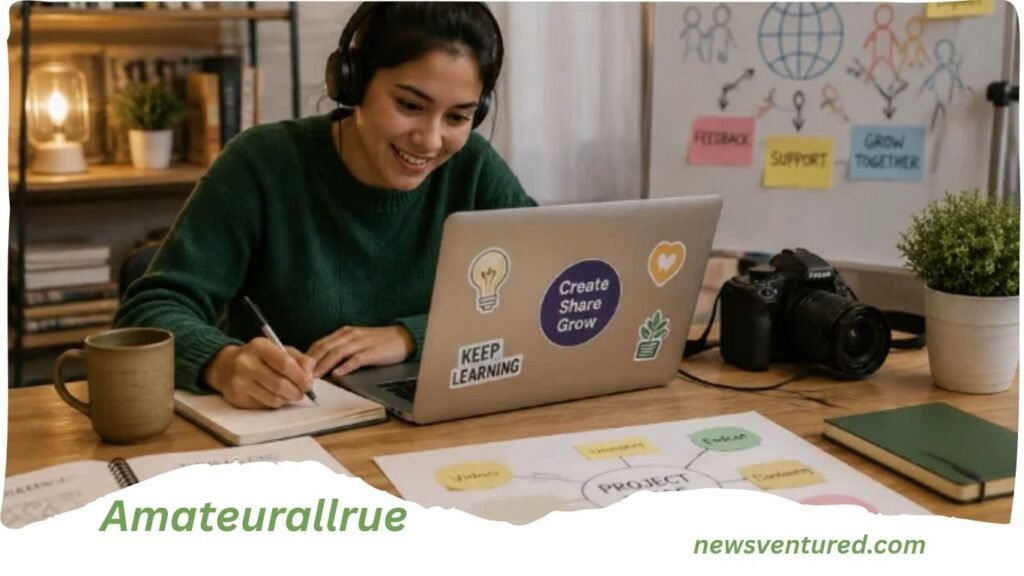
Amateurallrue is an emerging internet term associated with open, community-led creativity. The concept describes a space or mindset in which people can learn, create, experiment, and share their work without needing formal training, professional credentials, or approval from traditional creative institutions.
The word is unusual because Amateurallrue does not appear to have one universally accepted dictionary definition. Current online discussions describe it in different ways. Some sources connect it with amateur creativity, collaboration, authenticity, and learning. Others present it as a broader digital culture or community concept.
Because the term is still developing, it is important to separate established facts from interpretation. There is no strong evidence that Amateurallrue is a formally recognized academic movement, a universally established organization, or a single official platform. Instead, the available online material suggests that the term is being used as a flexible description of community-driven creative activity.
In simple language, Amateurallrue can be understood as the idea that people should be able to create and learn because they enjoy creating, even if they are beginners.
This makes the concept especially relevant in the modern internet environment. Social platforms, online communities, free learning resources, open-source software, digital art tools, video platforms, and creator communities have made it much easier for ordinary people to participate in creative work.
This guide explains what Amateurallrue means, where the idea may come from, how it relates to online creativity, why people search for the term, its potential benefits, its limitations, and the privacy and safety issues users should consider.
What Is Amateurallrue?
Amateurallrue is best described as an emerging term for open, inclusive, community-led creativity.
The central idea is simple: creativity does not have to belong only to professionals.
A person does not need an art degree to draw. A person does not need a publishing contract to write. A person does not need a record label to make music. A person does not need a large company to build software.
Amateurallrue reflects this broader idea of participation.
Online sources commonly associate the concept with creative freedom, experimentation, community collaboration, authentic expression, and learning through practice.
It is therefore useful to think of Amateurallrue as a cultural concept rather than automatically assuming that it refers to one specific website.
A practical definition is:
Amateurallrue is an emerging digital creativity concept that encourages people of different skill levels to create, learn, experiment, and share work in open and supportive communities.

This definition also explains why the term may appear in discussions about art, writing, music, photography, coding, video production, education, and other forms of user-generated content.
What Does the Word Amateurallrue Mean?
The exact linguistic origin of Amateurallrue is not firmly documented.
The first part, “amateur,” is familiar. The word traditionally describes someone who participates in an activity without making it their profession. It can also describe someone who practices an activity because of personal interest or enjoyment.
The second part, “allrue,” is much less clear.
Different online sources have offered different interpretations of the unusual ending. Some treat it as a creative or symbolic construction, while others suggest that it may be a coined internet expression whose meaning is developing through online use.
This uncertainty is important.
It would be misleading to claim that there is one proven official etymology for the complete word. There is currently no widely accepted linguistic authority establishing a single origin or definition.
Instead, Amateurallrue appears to be an example of how internet language can develop. A word can begin as a username, phrase, creative label, community term, or unusual search query and then acquire additional meanings as more people encounter it.
That makes the term interesting from a digital-literacy perspective.
Is Amateurallrue a Real Word?
Amateurallrue can be described as a real online term because it is being used and searched on the internet.
However, that does not mean it is an established English dictionary word.
Current sources generally describe Amateurallrue as an emerging, coined, unusual, or developing term rather than a standard English word.
This distinction matters.
Internet language contains thousands of words that may be meaningful within a particular community but are not formally recognized in dictionaries. Some become widely accepted over time. Others disappear. Some remain niche terms.
Amateurallrue appears to be in this developing stage.
Therefore, the safest description is:
Amateurallrue is an emerging internet term whose meaning is associated with open and community-based creativity, but whose exact linguistic origin and standardized definition remain uncertain.
Amateurallrue and Open Creative Communities
One of the strongest themes connected with Amateurallrue is open participation.
Traditional creative industries have often involved formal systems. An artist might need gallery representation. A writer might need a publisher. A musician might need access to professional recording facilities. A filmmaker might need financing.
The internet changed many of these barriers.
A person with a smartphone can record a video. A beginner can publish a short story. A student can share digital illustrations. A hobby programmer can publish code. A photographer can build an online portfolio.
Community platforms add another important element: feedback.
Instead of creating alone, people can show their work to others, ask questions, receive suggestions, and improve.
This community-based process closely matches the idea associated with Amateurallrue.
Also Read: Bumpdots.com: The Complete Guide to Understanding the Modern Digital Publishing Platform
The Main Principles of Amateurallrue
Although Amateurallrue does not have a universally recognized official rulebook, several themes repeatedly appear in discussions of the concept.
1. Creativity Should Be Open to Everyone
The first principle is accessibility.
Creative participation should not depend entirely on professional qualifications, expensive equipment, or formal recognition.
A beginner should be allowed to participate alongside an experienced creator.
This does not mean skill is unimportant. Instead, it means skill can develop through participation.
2. Learning Is Part of Creating
Amateurallrue places value on learning by doing.
A beginner may create something that is technically imperfect. That is not necessarily a failure. It can be part of the learning process.
For example, a new photographer may initially struggle with lighting. A writer may have difficulty organizing a story. A beginner programmer may produce inefficient code.
Feedback and repeated practice can improve these skills.
3. Community Matters
A community can provide motivation that an individual may not have when working alone.
People can exchange ideas, answer questions, provide constructive criticism, and collaborate on projects.
Several online descriptions of Amateurallrue emphasize this community-centered model.
4. Authenticity Is Valuable
Professional creative work often requires careful editing and presentation.
Amateurallrue is associated with a different approach: showing the process as well as the final result.
A rough sketch, early draft, practice recording, or unfinished project can demonstrate how a creator learns.
The emphasis is not necessarily on making low-quality work. It is on recognizing that improvement takes time.
5. Creativity Does Not Always Need to Become a Business
Not every hobby needs to become a career.
A person can paint because painting is enjoyable. Someone can write stories without trying to become a professional author. Someone can make music simply because they like music.
This is an important part of the amateur tradition.
The word “amateur” historically carries a connection to doing something for love or personal interest rather than only for financial reward.
How Amateurallrue Connects With Internet Culture
The internet has created an environment where people can publish without traditional gatekeepers.
Before widespread internet access, a creative person generally had fewer ways to reach a large audience.
Today, publishing tools are widely available.
People can use:
- Online writing communities
- Video platforms
- Digital art communities
- Photography platforms
- Developer communities
- Online forums
- Collaborative knowledge projects
- Personal blogs
- Community chat groups
- Open-source repositories
These technologies have helped normalize user-generated creativity.
The broader culture described by Amateurallrue is therefore not entirely new. Rather, the term appears to give a name to ideas that have been developing for decades.
The Historical Roots of Amateurallrue
The philosophy behind Amateurallrue existed long before the term appeared online.
Local creative clubs, photography groups, community theater, amateur radio, garage bands, zines, hobby writing groups, and community art projects all provided opportunities for non-professionals to create and share.
The internet expanded this model.
In the early online era, forums and personal websites allowed people with similar interests to communicate across geographical boundaries.
Later, blogging platforms made publishing easier.
Social media then made sharing faster and more visual.
Today, creator platforms allow people to combine publishing, collaboration, live communication, education, and audience building in one digital environment.
One recent discussion of Amateurallrue describes this evolution from local creative groups to forums, blogs, social media, and modern creator platforms.
This historical context helps explain why the concept feels familiar even though the word itself is new.
Amateurallrue and Digital Art
Digital art is one area where the Amateurallrue philosophy can be particularly useful.
Modern drawing applications allow beginners to experiment with digital brushes, layers, animation, typography, and photo manipulation without owning a traditional studio.
Online communities can make the learning process more interactive.
A beginner might post an early drawing and receive suggestions about composition. Another creator might explain how they use layers. Someone else might recommend a free tutorial.
The important point is that improvement becomes social.
Instead of asking, “Is my work professional enough to share?” an Amateurallrue-style approach asks, “What can I learn by sharing this?”
That shift can make creative practice less intimidating.
Amateurallrue and Writing
Writing also fits naturally into the concept.
People can use online communities to share essays, short stories, poetry, reviews, personal reflections, educational material, and experimental writing.
A new writer may benefit from constructive feedback about:
- Sentence structure
- Organization
- Clarity
- Story development
- Character building
- Tone
- Grammar
- Reader expectations
However, community feedback should not automatically be treated as professional editorial advice.
One person’s opinion may be useful but still subjective.
Strong creative communities encourage respectful criticism rather than personal attacks.
Amateurallrue and Music
Music production has become more accessible because of affordable computers, smartphones, software, microphones, and online educational resources.
A beginner can learn basic recording, arrangement, sound editing, and digital production from home.
Community participation can add another layer.
Creators can exchange ideas, discuss techniques, collaborate, and learn from mistakes.
The Amateurallrue perspective does not require someone to produce commercially successful music.
The act of learning and creating can be valuable on its own.
Amateurallrue and Photography
Photography is another natural example.
Smartphones have made cameras widely available. Many people now take photographs without considering themselves professional photographers.
Online communities can help beginners learn about:
- Composition
- Lighting
- Framing
- Exposure
- Editing
- Storytelling
- Visual consistency
The key idea is participation.
A person can learn photography by taking photographs, reviewing the results, asking questions, and trying again.
Amateurallrue and Coding
The concept can also extend beyond traditional art.
Open-source software is a strong example of community-driven creation.
Developers can publish code, report problems, suggest improvements, contribute documentation, and collaborate with people around the world.
A beginner developer may contribute a small fix while learning from experienced programmers.
This reflects an important Amateurallrue principle: participation can be part of education.
It also demonstrates why “amateur” should not automatically be interpreted as “bad.”
A person may be inexperienced in one project and highly skilled in another.
Amateurallrue and AI-Assisted Creativity
Artificial intelligence adds a new dimension to community-led creativity.
AI tools can help people brainstorm ideas, summarize information, explore writing styles, generate concepts, analyze images, or assist with programming.
For beginners, these tools may reduce some barriers to experimentation.
However, AI also creates important questions.
Who created the original material used to train a system? Is an output genuinely original? Does a creator need to disclose AI assistance? What happens when generated material resembles someone else’s work?
These questions mean that digital creativity requires more than enthusiasm.
Creators should understand copyright, attribution, platform rules, privacy, and responsible AI use.
An Amateurallrue-style culture can benefit from technology, but technology does not remove the need for judgment.
Why People Search for Amateurallrue
Search intent around an unusual keyword can be difficult to determine.
Someone searching for Amateurallrue may be trying to answer a basic question such as “What is Amateurallrue?”
Another person may have encountered the term on a website, social platform, forum, search result, or message and want to know whether it refers to a company, website, community, movement, or concept.
Possible search intentions include:
- Meaning of Amateurallrue
- Definition of Amateurallrue
- Amateurallrue origin
- What does Amateurallrue mean?
- Is Amateurallrue a website?
- Is Amateurallrue a community?
- Amateurallrue creative culture
- Amateurallrue online meaning
- Amateurallrue explained
- Amateurallrue history
Because the term is not standardized, users should verify the context in which they found it.
Is Amateurallrue a Website or Platform?
There is not enough reliable evidence to conclude that Amateurallrue is universally recognized as one official platform.
Some online articles describe it as a platform, community, blog, or creative hub. Other sources describe it more broadly as a movement or philosophy.
This difference is important for searchers.
If you see a website using the Amateurallrue name, do not automatically assume that the website is the official or original source of the term.
Check:
- Who owns the website?
- Does it provide contact information?
- Does it explain its purpose clearly?
- Does it have a privacy policy?
- Does it use secure HTTPS?
- Does it have independent references?
- Does the site make unusually strong claims?
- Does it request unnecessary personal information?
These simple checks can help distinguish an ordinary content site from an unverified or potentially unsafe destination.
Amateurallrue and Online Safety
Any unfamiliar internet term deserves basic digital caution.
A strange keyword may lead to many different pages. Some may be useful. Others may be low-quality, misleading, automatically generated, or unrelated to the original meaning.
Before interacting with an unfamiliar website, consider the following.
Check the Domain
Look carefully at the website address.
A familiar-looking name does not guarantee that a website is legitimate.
Watch for:
- Misspelled domains
- Excessive subdomains
- Strange domain extensions
- Suspicious redirects
- Pop-up-heavy pages
- Fake download buttons
- Requests for unnecessary personal information
Avoid Unnecessary Downloads
You should not install software simply because an unfamiliar website tells you to.
If a page unexpectedly asks you to download a browser extension, application, executable file, or unknown document, stop and investigate first.
Protect Your Passwords
Never reuse an important password on an unfamiliar website.
A password used for email, banking, cloud storage, or other sensitive services should not be entered into an untrusted platform.
Using a password manager and unique passwords can reduce risk.
Privacy Risks When Joining Creative Communities
Community creativity is valuable, but sharing work online creates privacy considerations.
A photograph can contain location information.
A personal story can reveal details about family members.
A username may be connected to other accounts.
A public profile can reveal a person’s interests, workplace, school, or approximate location.
Before posting, ask:
“Would I be comfortable if this information were publicly available several years from now?”
That question is especially useful for younger users.
Personal Information to Avoid Sharing
A creative community does not normally need sensitive personal information.
Avoid publicly posting:
- Home addresses
- Phone numbers
- Government identification numbers
- Banking information
- Private account credentials
- Exact daily routines
- Private family information
- Password recovery answers
- Highly sensitive documents
Even when a community appears friendly, not everyone online has good intentions.
Trust should develop gradually.
Copyright and Amateurallrue
Copyright is another important issue.
Creating something does not give a person permission to copy someone else’s work.
For example, a creator should not assume that a photograph found through an image search is automatically free to use.
The same principle applies to:
- Music
- Illustrations
- Articles
- Videos
- Software
- Logos
- Photographs
- Digital designs
Community creativity works best when creators respect ownership.
If you use another person’s work, check the applicable license and attribution requirements.
When possible, create original material or use content with clearly stated reuse permissions.
Can Amateur Creators Make Money?
They can, but monetization is not necessarily the central purpose of Amateurallrue.
A hobbyist may eventually turn a creative skill into income through:
Also Read: BacktoFrontShow Pricing: Plans, Features, Costs & Complete Guide
- Freelance services
- Digital products
- Art sales
- Photography services
- Online courses
- Membership communities
- Sponsorships
- Licensing
- Consulting
- Software projects
- Books or self-publishing
However, monetization changes the situation.
Once money becomes involved, creators need to think about taxes, contracts, intellectual property, advertising disclosures, platform rules, and business practices.
Creative communities can help people develop skills, but they should not be treated as substitutes for professional legal, financial, or business advice.
Amateurallrue Versus Professional Creativity
Amateur and professional creativity are not opposites.
A person can be an amateur today and a professional later.
A professional can also maintain an amateur mindset by continuing to experiment for enjoyment.
The major difference is usually the purpose and context.
Professional work often involves clients, deadlines, contracts, commercial expectations, and higher quality requirements.
Amateur work may allow greater freedom because there is less commercial pressure.
Both forms of creativity have value.
In fact, many professionals continue personal creative projects precisely because those projects provide freedom from commercial expectations.
Benefits of the Amateurallrue Mindset
The Amateurallrue approach can offer several practical benefits.
Lower Fear of Failure
When people believe they must be excellent before starting, they may never begin.
A beginner-friendly culture reduces this barrier.
More Experimentation
People are more willing to test unusual ideas when failure is accepted as part of learning.
Community Support
Feedback and encouragement can help people continue when motivation becomes difficult.
Skill Development
Repeated practice is one of the foundations of skill development.
Greater Accessibility
People without formal training can participate.
More Diverse Perspectives
Open communities can bring together people from different backgrounds, experiences, and creative traditions.
Potential Collaboration
A writer may meet an illustrator. A musician may meet a video editor. A developer may meet a designer.
These unexpected connections can produce valuable projects.
Potential Problems With Amateurallrue Communities
The concept also has limitations.
Not All Feedback Is Good Feedback
Community members can make mistakes.
Someone may confidently give advice that is technically wrong.
Creators should compare important advice with reliable sources.
Quality Can Vary
Open participation means content quality can range from excellent to very poor.
This is not necessarily a flaw, but users need judgment.
Communities Can Become Toxic
Even communities designed around kindness can develop arguments, harassment, spam, or exclusion.
Moderation matters.
Algorithms Can Change Behavior
If a creative community depends on social media algorithms, creators may eventually start optimizing for views rather than creativity.
That can recreate the pressure that community-led creativity was supposed to reduce.
Privacy Can Be Lost
Sharing publicly can create a permanent digital record.
Creators should think carefully before posting personal information.
How to Participate in an Amateurallrue-Style Community
If you want to follow the principles associated with Amateurallrue, start small.
Choose one creative activity.
It could be writing, drawing, photography, music, coding, crafting, video production, or another hobby.
Then:
- Create something regularly.
- Share only what you are comfortable making public.
- Ask for specific feedback.
- Give respectful feedback to others.
- Keep learning.
- Credit other creators.
- Respect copyright.
- Protect your privacy.
- Avoid comparing yourself constantly with professionals.
- Focus on progress rather than popularity.
The goal is not to become famous.
The goal is to keep creating and improving.
How Beginners Can Get Better at Creative Work
A useful learning cycle is:
Create → Share → Review → Learn → Improve → Create again.
This cycle is more practical than waiting until your work becomes perfect.
For example, a beginner photographer can take ten photographs, identify the weakest three, learn about the problems, and try again.
A writer can draft an article, receive feedback, revise it, and compare the new version with the original.
A programmer can build a small project, find bugs, study better methods, and improve the code.
The process creates measurable progress.
Amateurallrue and Digital Literacy
Digital literacy is essential when participating in online creative communities.
Digital literacy means more than knowing how to use a computer or smartphone.
It includes understanding:
- Online privacy
- Copyright
- Misinformation
- Scams
- Account security
- Digital identity
- Platform policies
- AI-generated content
- Online reputation
- Source evaluation
A creative community should encourage both creativity and responsible digital behavior.
That combination is especially important as online content becomes easier to create and distribute.
How to Evaluate Information About Amateurallrue
Because the term is still emerging, readers should be careful with confident claims about its origin.
A useful source-checking method is to ask:
Who Published the Information?
Look for an identifiable author or organization.
When Was It Published?
Internet terminology can change quickly.
What Evidence Is Provided?
A trustworthy explanation should distinguish facts from interpretation.
Do Independent Sources Agree?
If several websites repeat the same claim without citing an original source, repetition does not necessarily make the claim true.
Is the Site Trying to Sell Something?
Commercial incentives can influence how a concept is presented.
These habits are useful not only for researching Amateurallrue but for almost any unfamiliar internet term.
What Makes Amateurallrue Different From Traditional Creative Culture?
The biggest difference is the role of the gatekeeper.
Traditional systems may require selection before a person receives access to an audience.
Community-led digital culture can allow people to publish first and develop their skills afterward.
This creates both opportunities and challenges.
The opportunity is greater participation.
The challenge is information overload.
When everyone can publish, audiences must become better at evaluating quality.
That is why the future of open creativity depends on both participation and digital literacy.
Amateurallrue and the Future of Online Creativity
The idea behind Amateurallrue may become more relevant as technology continues to lower the cost of creating content.
AI tools, mobile devices, inexpensive editing software, online courses, open-source tools, and collaborative platforms are making creative participation increasingly accessible.
At the same time, audiences are becoming more aware of automated content and highly polished material.
This may increase the value of personal voice, genuine experience, and transparent creative processes.
However, the future is unlikely to be completely amateur or completely professional.
Instead, the two worlds will continue to overlap.
A beginner may use professional tools.
A professional may participate in a casual community.
An amateur project may become a business.
A hobbyist may collaborate with an expert.
That flexibility is one of the most interesting aspects of the broader culture represented by Amateurallrue.
Is Amateurallrue a Movement, Community, or Philosophy?
At present, the safest answer is that it can be interpreted as an emerging creative concept or online cultural label.
Different sources describe it differently. Some call it a community or platform, while others describe it as a movement or philosophy.
Because there is no widely accepted official definition, readers should examine the context.
If a particular website uses the word as its brand, that is different from someone using Amateurallrue as a general description of community creativity.
The distinction prevents confusion.
Is Amateurallrue Associated With Adult Content?
The term itself is most reasonably discussed in the context of emerging internet terminology and community-led creativity.
However, unfamiliar internet keywords can sometimes appear in unrelated contexts. Search results can also change over time.
If someone encounters a page using the term alongside adult or explicit material, that does not establish that the core concept of Amateurallrue itself is an adult term.
Users should evaluate each website or search result independently.
For general digital safety, avoid clicking unfamiliar links merely because they contain a trending or unusual keyword. Use reputable sources, protect personal information, and leave pages that appear unsafe, deceptive, or inappropriate.
Legal Considerations for Online Creative Communities
Laws vary by jurisdiction, including across different states in the United States.
For online creators, common legal topics can include:
- Copyright
- Trademark
- Privacy
- Defamation
- Contracts
- Consumer protection
- Advertising disclosures
- Licensing
- Data protection
- Intellectual property
A community discussion should not be treated as legal advice.
If a project involves substantial money, a business dispute, intellectual property ownership, or another significant legal issue, consulting a qualified attorney is more appropriate.
Amateurallrue and the United States
For U.S. users, the concept can be particularly relevant because the American creator economy includes a wide range of independent artists, writers, developers, musicians, photographers, educators, and hobbyists.
The United States also has a large ecosystem of online communities and digital creative tools.
However, American users should remember that being able to upload something does not necessarily mean that the content is free from legal or platform restrictions.
Also Read: GadgetFreeks.com: The Complete Guide to the Technology, Gaming, and Entertainment Platform
The First Amendment, copyright law, platform policies, privacy rules, and other legal frameworks address different issues.
Understanding these differences is part of responsible participation.
Practical Safety Checklist for Amateurallrue Searches
Before visiting an unfamiliar page connected to Amateurallrue, consider these questions:
- Is the website address spelled correctly?
- Does the page explain who operates it?
- Is there a privacy policy?
- Does the site use HTTPS?
- Does it ask for unnecessary personal data?
- Does it require an unexpected download?
- Are there excessive redirects?
- Are claims supported by evidence?
- Does the page clearly distinguish fact from opinion?
- Does it contain copied or suspiciously repetitive text?
If several warning signs appear together, leave the site.
Frequently Asked Questions About Amateurallrue
What is the simplest definition of Amateurallrue?
Amateurallrue can be understood as an emerging concept centered on open, community-led creativity where people can create, learn, experiment, and share without needing formal professional credentials.
Is Amateurallrue in the dictionary?
There is no strong evidence that Amateurallrue is a standardized English dictionary word. Current online material generally treats it as an emerging or coined internet term.
Where did Amateurallrue originate?
Its exact origin is uncertain. Online sources provide different explanations, and there is not enough authoritative evidence to establish one definitive origin.
Is Amateurallrue a registered organization?
The term should not automatically be assumed to represent a registered organization. Some websites describe it as a platform or community, but those descriptions should be verified independently.
Can Amateurallrue be used outside art?
Yes. The broader idea can apply to writing, photography, music, coding, video, education, crafts, design, and other forms of community-driven creation.
Does Amateurallrue require professional skills?
No. The central concept is based on participation being open to people with different levels of experience.
Can professionals participate in Amateurallrue communities?
Yes. Professional experience does not prevent someone from participating in an open creative community. Experienced creators can also mentor beginners.
Is Amateurallrue the same as social media?
Not necessarily. Social media is a technology and communication category. Amateurallrue is better understood as a concept associated with community-driven creativity. A social platform can support that type of activity without being synonymous with it.
Can Amateurallrue help students?
The underlying community-learning model can help students practice creative skills, exchange ideas, and receive feedback. Students should still follow school rules and protect their personal information.
Can Amateurallrue communities be private?
A community using the concept can be public, private, or restricted. Privacy depends on the specific website, application, or group rather than the word Amateurallrue itself.
Should creators post everything they make online?
No. Creators should decide what they are comfortable sharing. Personal, sensitive, unfinished, or commercially valuable material may be better kept private.
Can work shared in a community be copied?
Potentially, yes. Posting something online does not mean that everyone automatically has permission to copy or commercially reuse it. Copyright and licensing rules may apply.
Does amateur mean low quality?
No. Amateur generally refers to the person’s professional status or motivation, not necessarily the quality of their work. An amateur can produce excellent work.
Can an amateur become a professional?
Absolutely. Many creative careers begin as hobbies. Consistent practice, education, networking, and experience can eventually lead to professional opportunities.
Why is the word Amateurallrue difficult to define?
It appears to be an emerging internet term without one standardized definition. Different websites have interpreted it differently, so context is important.
Should people trust every website that discusses Amateurallrue?
No. Because the term is relatively obscure, users should evaluate the author, publication date, evidence, privacy practices, and reputation of each source.
Can AI tools be part of Amateurallrue-style creativity?
Yes. AI can support brainstorming, editing, coding, research, and other creative tasks. However, creators should understand copyright, attribution, privacy, platform rules, and responsible AI use.
Does Amateurallrue guarantee creative success?
No. A community can provide opportunities, feedback, and motivation, but it cannot guarantee popularity, employment, income, or professional recognition.
What is the biggest idea behind Amateurallrue?
The central idea is that creativity should be accessible. People can learn by making things, sharing experiences, collaborating with others, and improving over time.
Conclusion: Understanding Amateurallrue in the Modern Digital World
Amateurallrue is best understood as an emerging term connected with the idea of open and community-led creativity.
Its exact linguistic origin is still unclear, and online sources do not provide a single authoritative definition. Some describe it as a creative movement, others as a community or platform, while others treat it as a broader philosophy of authentic participation.
Despite this uncertainty, the central idea is easy to understand.
People should not have to wait until they are experts before they are allowed to create.
A beginner can write a story. A hobbyist can take photographs. A student can build software. A new artist can share a sketch. A musician can experiment with sound. A curious person can learn something simply because it is interesting.
The internet has made these activities easier to share with other people.
That creates enormous opportunities for education, collaboration, creativity, and cultural exchange. It also creates responsibilities. People need to protect their privacy, respect intellectual property, question unreliable information, and understand the risks of sharing personal material online.
For that reason, the most valuable lesson behind Amateurallrue is not simply “create without being professional.”
It is “learn openly, create responsibly, and treat other creators with respect.”
As digital tools continue to develop, the boundary between amateur and professional creativity will likely become even less clear. A hobby can become a career, a small community can become an important network, and a beginner can eventually become an expert.
That is what makes the idea behind Amateurallrue relevant: creativity does not have to begin with expertise. It can begin with curiosity, practice, community, and the willingness to make something for the first time.